
Knowledge Hub
Why shouldn’t you print at low temperatures?
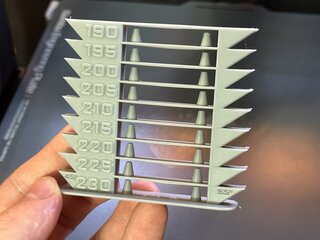
We created the following test to demonstrate the effect of printing temperature on the mechanical strength of printed parts.
Of course, the PLA material used cannot be considered an engineering-grade polymer, but the lessons learned from the measured results can be applied to any material. For this test, we used a white PLA filament from a well-known Hungarian filament manufacturer, loaded into an Original Prusa MINI+ printer. For the tests, we used five specimens each of DIN EN ISO 527-2 Type 1B printed in an upright position with 100% infill. The applied settings were the “0.20 mm QUALITY” preset for Prusament PLA in PrusaSlicer 2.7.1. As shown in the figure, at 190 °C the interlayer adhesion was very low, and the PLA could not even come close to its datasheet tensile strength value of around 50–55 MPa [1]*. With increasing temperature, tensile strength increased significantly, averaging around 40 MPa, which is approximately 75–80% of the datasheet value. The difference between the measured and datasheet values is due to the layered nature of the technology, which makes it practically impossible to achieve perfect and isotropic mechanical properties in all directions.
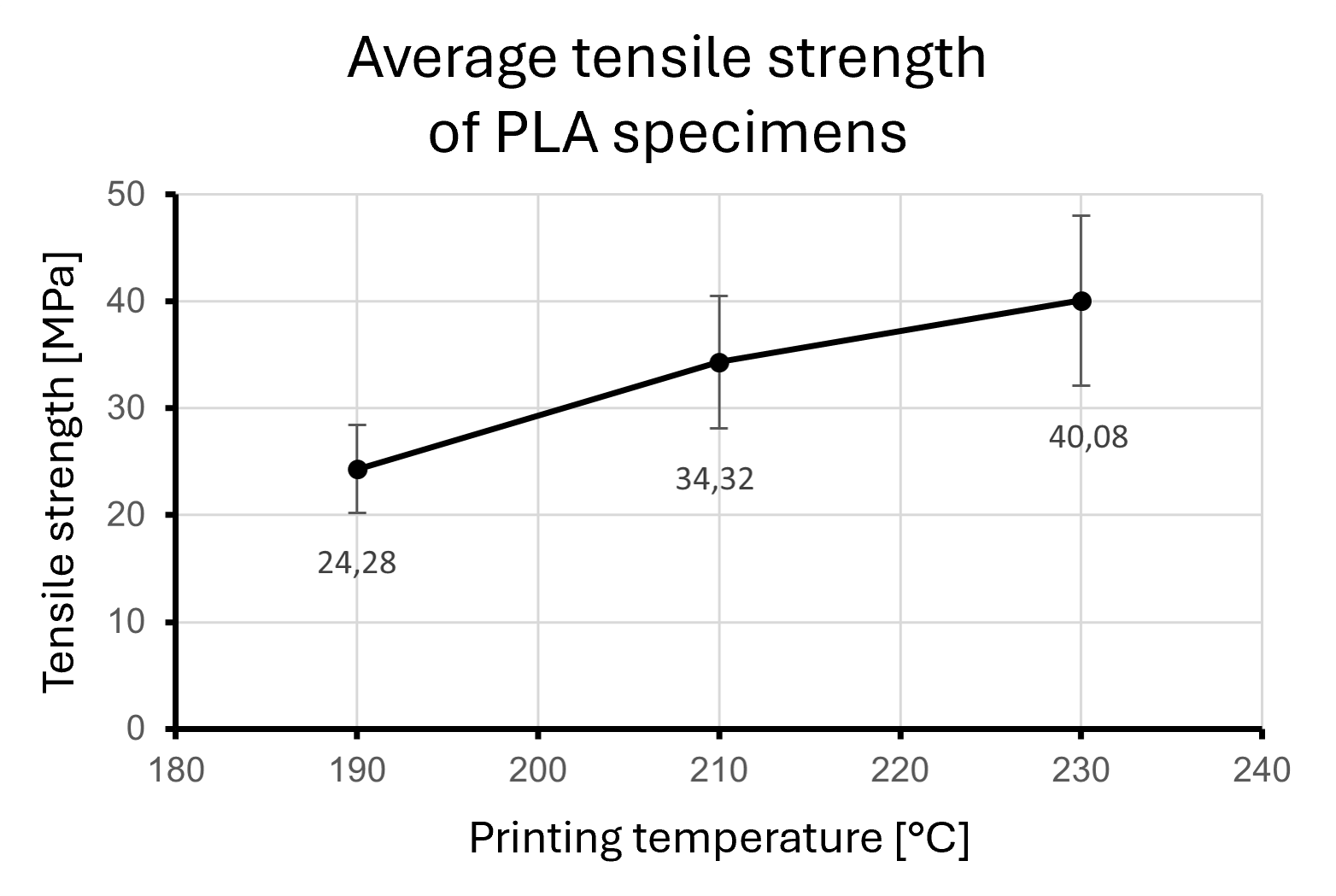
Conclusion: If we want our parts to withstand mechanical loads, it is advisable to print at the highest temperature allowed for the given material, as this increases their strength.
* We do not have exact information about the specific filament used, however, many European filament manufacturers (such as Prusa) often base their products on this material family.
Cover image: https://makerworld.com/en/models/54325#profileId-56042