
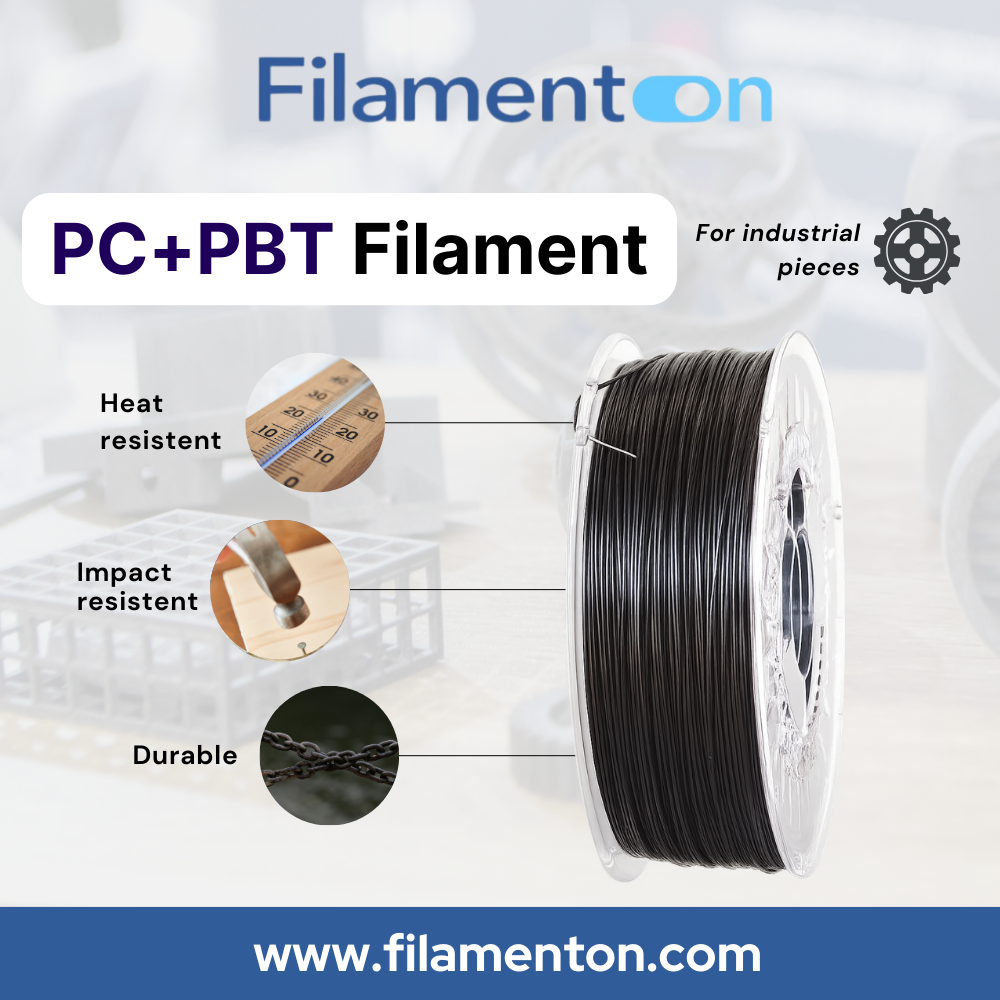
PC+PBT is an advanced engineering filament that combines the high strength and heat resistance of polycarbonate with the flexibility and chemical resistance of PBT. The result is a material ideally suited for industrial environments, automotive components, and electrical enclosures. Strong, durable, and reliable—when PLA or PETG is no longer sufficient.
Knowledge Hub
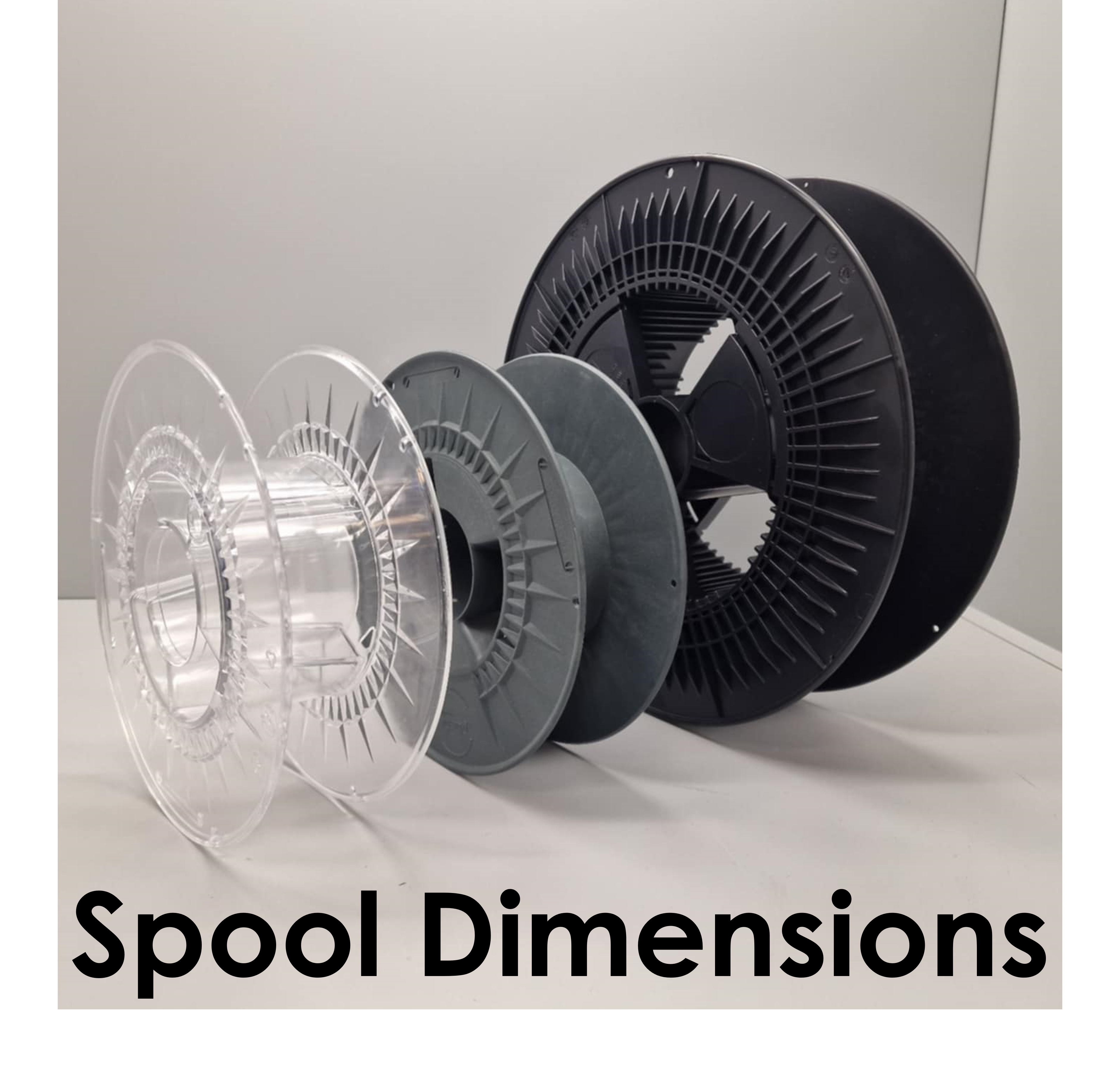
The filaments available in the FilamentOn product range come in different spool designs depending on the package size. Below, we summarize the filament spools currently in use and indicate which spool type is used for each package size.
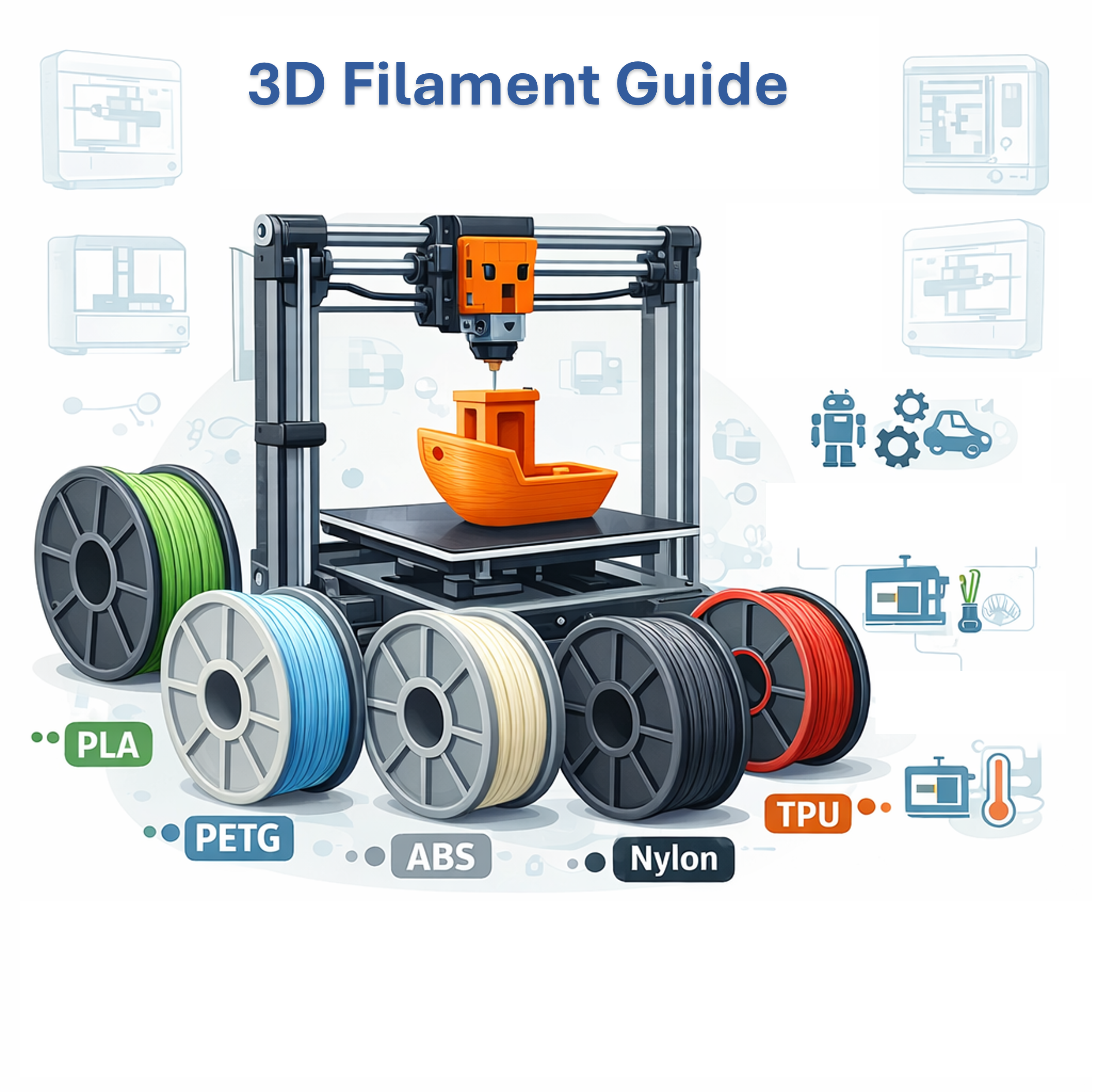
Choosing the right filament fundamentally determines how durable, accurate, and practically usable a 3D-printed part will be. Not every material is ideal for every application: factors such as mechanical load, ambient temperature, flexibility, and aesthetic requirements all play a role—something that can be quite challenging for beginners. This overview table is designed to help you quickly and consciously select the filament that best suits your specific purpose.
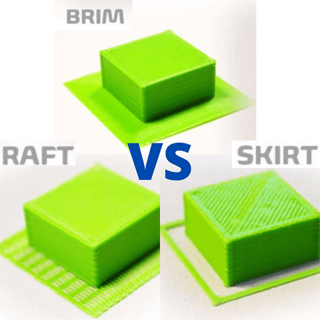
One of the most important—yet often underestimated—factors in successful 3D printing is first-layer adhesion. If this layer does not adhere properly, the print may warp, detach, or even fail. In this article, we present how the Skirt, Brim, and Raft settings help ensure that printing starts on a stable foundation from the very first moment.
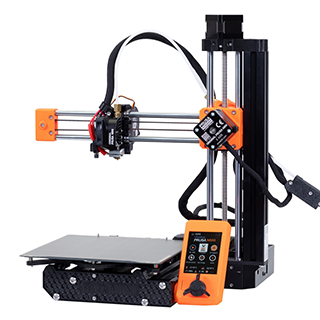
In the history of 3D printing’s evolution, few machines have had as much impact on the community as the Prusa Mini. This compact yet full-featured printer proved that a small footprint doesn’t require compromises in precision or reliability. In this article, we explore how the Mini and Mini+ became two of the most popular and well-loved models in modern desktop 3D printing.


The history of FDM 3D printing is full of milestones, but few machines have had as much impact on the community as the Creality Ender 3. This affordable yet surprisingly precise printer made 3D printing accessible to the wider public almost overnight. In this article, we explore how the Ender 3 became one of the most iconic models in modern desktop 3D printing.

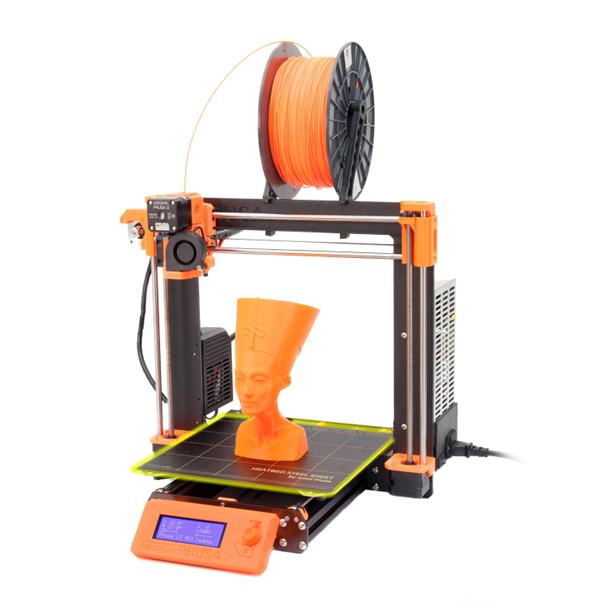
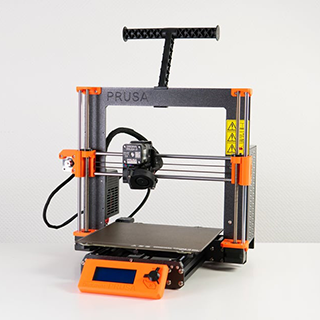
We’re continuing our series revisiting the most influential FDM 3D printers of the past two decades, tracing how the technology leapt from early, hands-on rigs to today’s near plug-and-play machines. This time a true milestone takes center stage: the Prusa i3 MK3, a printer that elevated reliability, user experience, and open-source innovation to a new level.
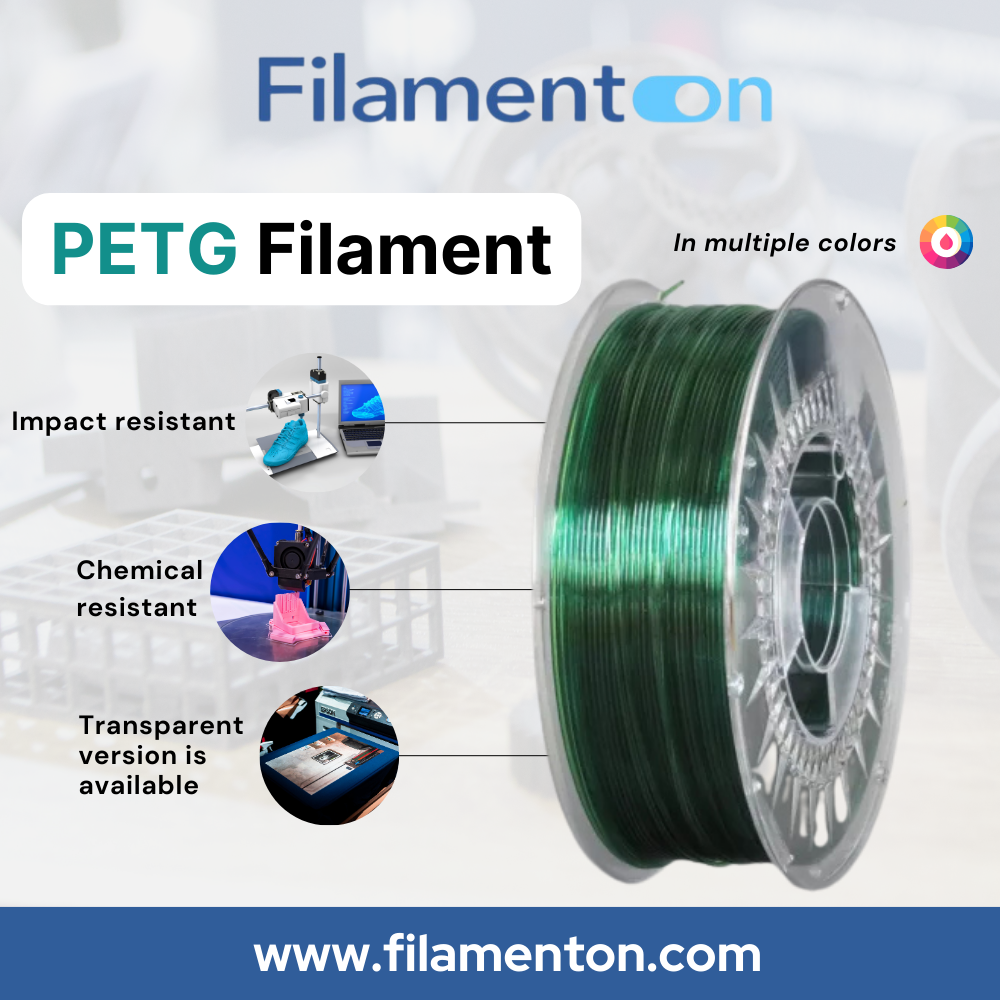
PETG is the true “workhorse” material of 3D printing: stronger and more heat-resistant than PLA, yet much easier to print than ABS. It’s durable, tough, and less prone to warping, making it suitable for everything from hobby prints to functional prototypes. An ideal choice for anyone looking to create reliable, long-lasting parts.

There are certain things we can never seem to find when we need them — batteries are definitely on that list. You rummage through a drawer, find one, and of course, it’s dead. The latest model in our series of useful 3D prints offers the perfect solution: a practical battery organizer that brings order where there used to be chaos, so you’ll always know what you have and what’s missing.
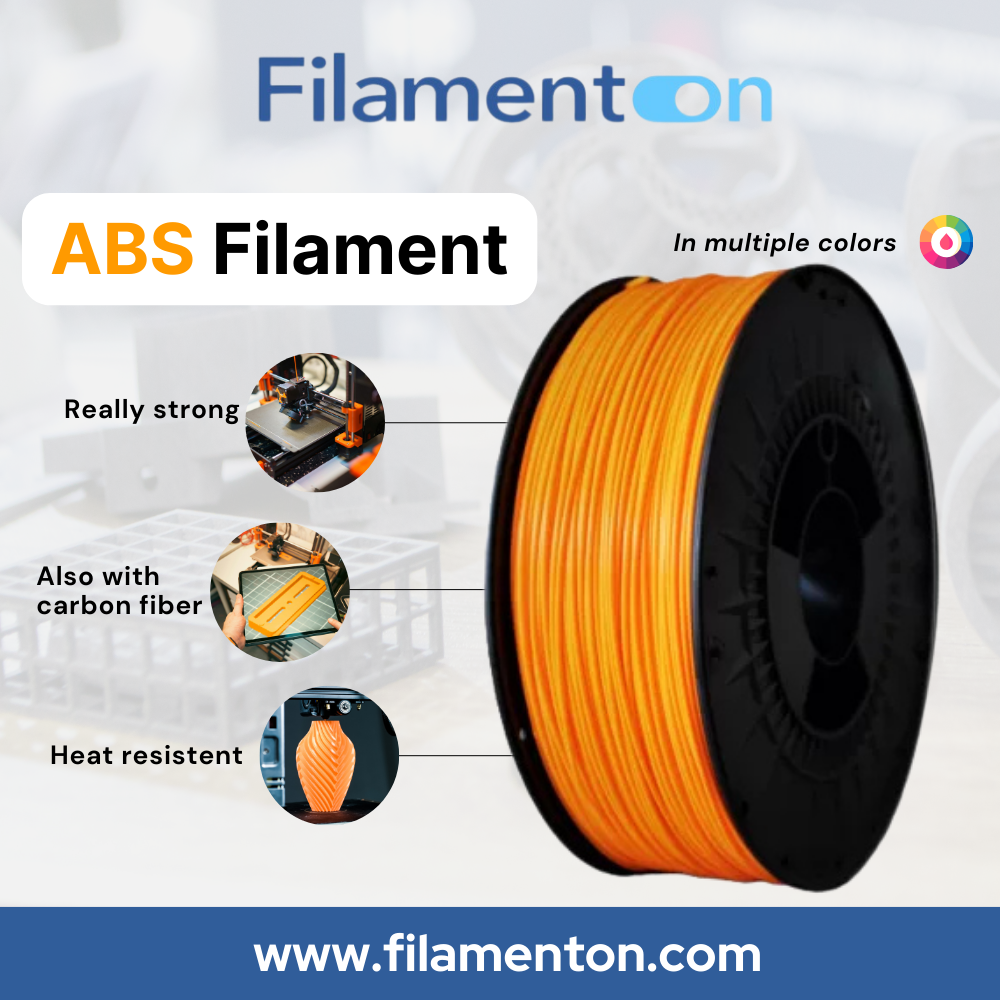
ABS is one of the oldest and most popular engineering materials in 3D printing. It is strong, impact-resistant, and heat-resistant – which is why it has been an industrial standard for decades, used everywhere from LEGO bricks to automotive parts. Printing with ABS requires more attention than PLA or PETG, but in return, you get durable, truly functional prints.
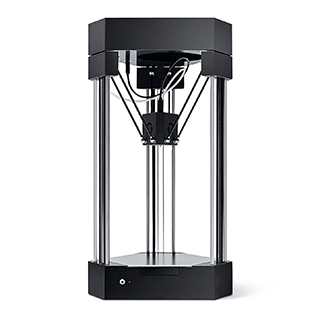
We’re continuing our series revisiting the most influential FDM 3D printers of the past two decades—so we can see, together, how the tech evolved from early tinkering to today’s almost fully automatic plug-and-play machines. This time, the spotlight is on a truly special printer—one that was as much a piece of art as a production tool. Meet the FLUX Delta.
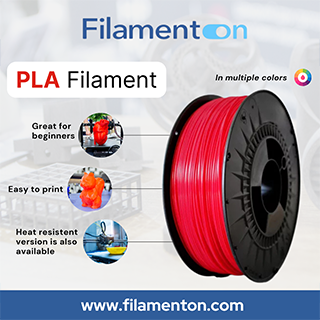
PLA is one of the most well-known and most popular materials in 3D printing. Made from renewable resources such as cornstarch, it offers a more environmentally friendly alternative and is extremely easy to work with. While it’s not the most durable engineering material, PLA is the perfect entry point into the world of 3D printing. Click for details!
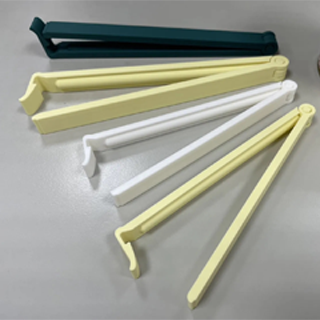
Sometimes the simplest 3D printable models turn out to be the most useful. In the current part of our series, we introduce an accessory that is needed in almost every household, office, or workshop. A small item that you always seem to look for when you need it – and which you can now produce for yourself at any time.
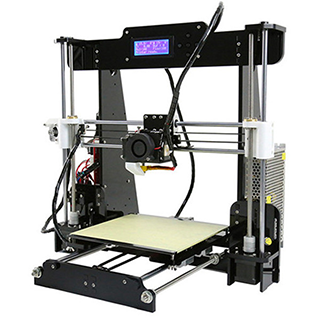
We’re continuing our series revisiting the most influential FDM printers of the past two decades. This time we’re focusing on a machine not known for precision or refined engineering, yet famous for the massive community it built and the countless newcomers it ushered into 3D printing. Meet the Anet A8, the printer you could fear and learn from in equal measure.

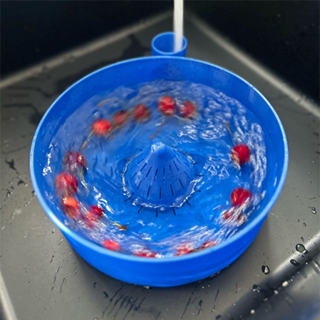
So far, our series has primarily featured automotive and outdoor accessories, but this time we’re introducing a model that brings calm, style, and a touch of design flair to your home. This 3D-printed tear–drop–shaped watering can is not only practical but also visually striking — it even makes a great gift.
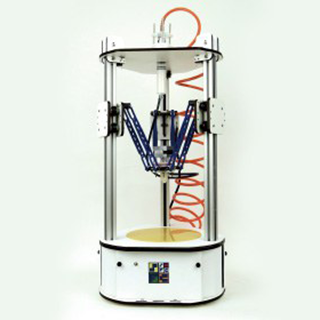
In this new chapter of our series revisiting the most iconic FDM 3D printers, we’re turning the spotlight on a truly distinctive machine, one that stood out in its day not only for its size, but for its strikingly unconventional architecture. Meet the SeeMeCNC Rostock MAX, among the earliest truly workable, community-accessible delta printers, one that opened a new chapter in the world of 3D printing.

Our goal remains the same: to showcase 3D-printable models that not only look good but also make everyday life easier. This time, we’re staying in the car and introducing a small but surprisingly useful accessory — especially handy if you often carry bags or groceries on the passenger seat.

We continue our retrospective series, recalling the most defining machines from nearly twenty years of FDM 3D printing, devices that shaped not only the technology but the user experience as well, and pointed to new directions in its evolution. This time the spotlight falls on a printer that at first glance seemed merely a copy, yet soon proved there was far more to it: the FlashForge Creator.

In our series, we present easy-to-print 3D models that aren’t just visually appealing but also genuinely helpful in everyday life. This time, we’re heading to the garden with a clever solution against one of summer’s most common nuisances — slugs.

3D printing, for us, is not just a technological curiosity — it’s an opportunity to make everyday life more creative and practical. This time, we’re bringing you a small but handy car accessory: a clip-on sunglasses holder that you can easily attach to your sun visor.
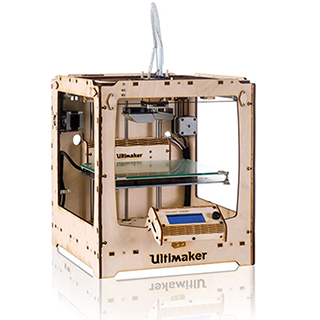
Our series continues, looking back at the most influential FDM 3D printers of the last two decades. Our aim is to show how a maker’s pastime grew into a technology respected at an industrial level.Today we’re focusing on a machine that arguably brought true industrial standards to hobby users for the first time: the Ultimaker Original, introduced in 2011.

We’re continuing our series on the most influential FDM (Fused Deposition Modeling) 3D printers of the past two decades. Our goal is to revisit the milestones that paved the way to today’s plug-and-play machines. This time we’re dusting off a true cornerstone of hobby 3D printing: the MakerBot Cupcake CNC.
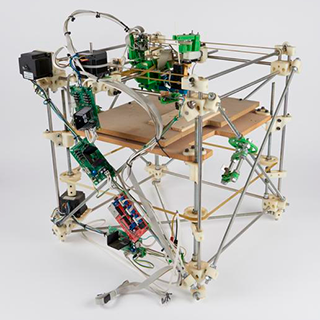
These days it feels perfectly normal to have a 3D printer at home, but it wasn’t always that way. In our new series, we’re rewinding to the early days of hobby/desktop 3D printing and the milestones that shaped it. Part one spotlights the RepRap Darwin (2007), the machine many credit with kick-starting the home 3D-printing revolution.
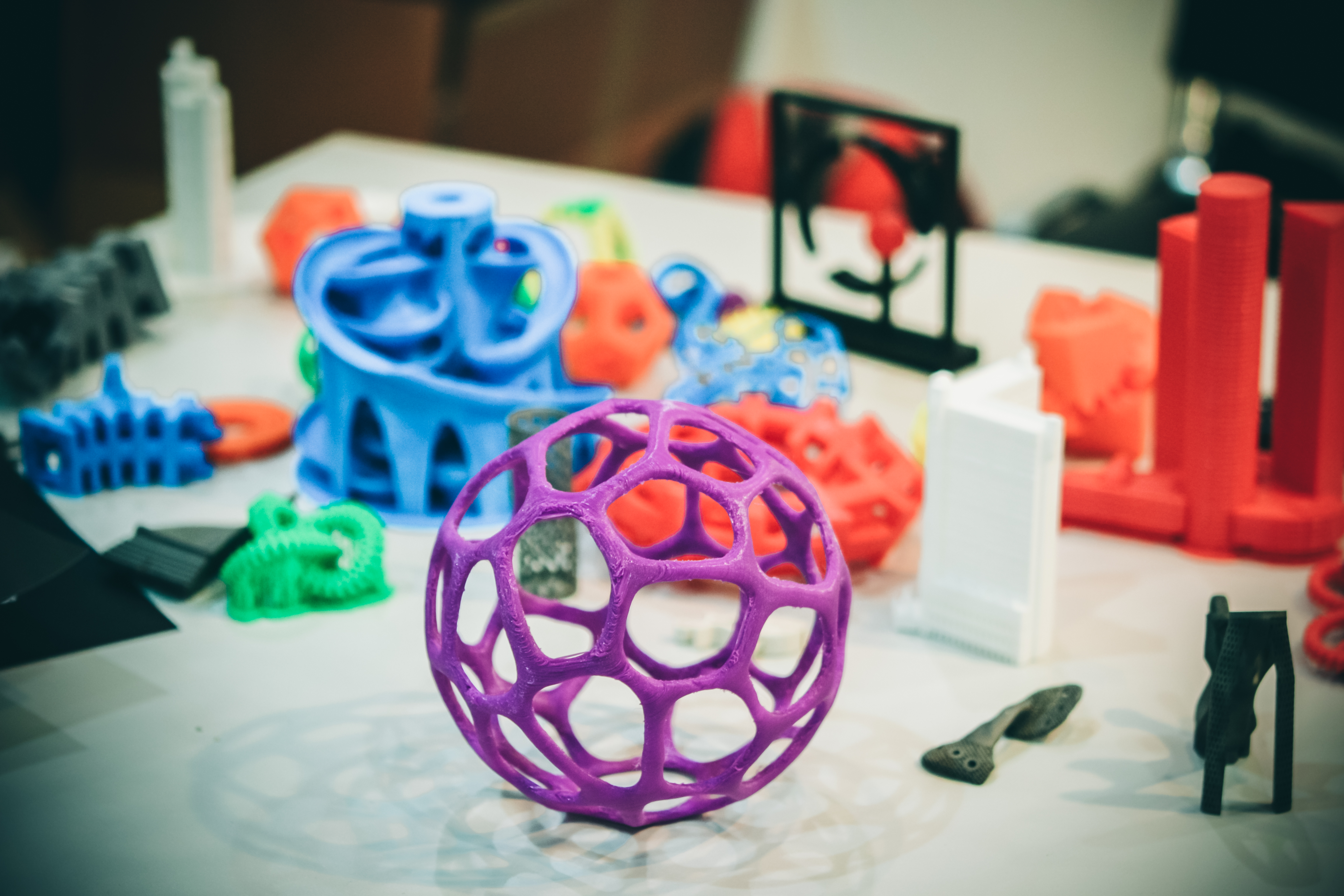
Additive manufacturing (AM technologies), more commonly known as 3D printing, is steadily gaining ground alongside traditional manufacturing methods. However, it is often not easy to decide which material to choose and when. If you too are wondering which material is the right choice for your application, this post is for you.
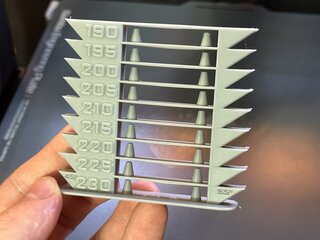
We created the following test to demonstrate the effect of printing temperature on the mechanical strength of printed parts.
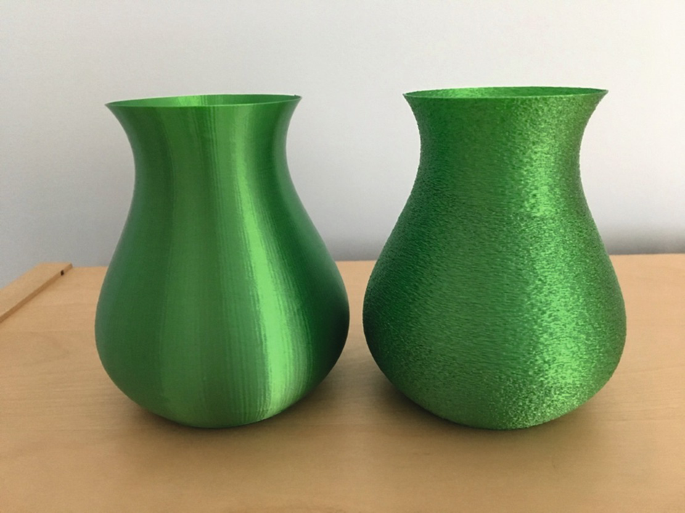
Hi everyone! This post was created to show you how to properly model for the correct use of the Fuzzy Skin feature, and how to correctly apply Fuzzy Skin in PrusaSlicer. The modeling was done in Fusion 360, which is available for free to everyone, and can also be obtained at a relatively low cost for entrepreneurs and companies.
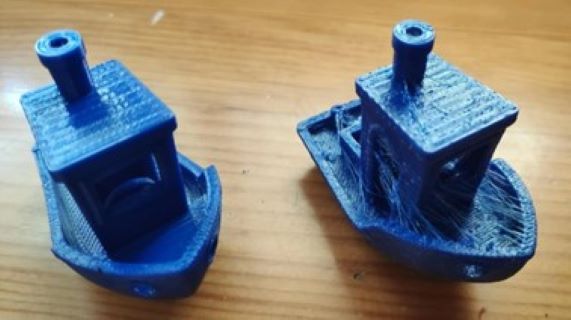
You’ve probably already come across it while browsing the internet: most filaments are recommended to be dried before use, as over time they can absorb a significant amount of moisture. You may also have noticed that material left in a humid environment for too long becomes more brittle, and objects printed with damp filament show weaker properties compared to those made from properly dried material. But what exactly is the reason behind this?