
Knowledge Hub
What to Print With, and Why? PLA
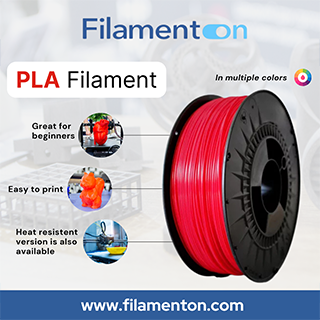
PLA is one of the most well-known and most popular materials in 3D printing. Made from renewable resources such as cornstarch, it offers a more environmentally friendly alternative and is extremely easy to work with. While it’s not the most durable engineering material, PLA is the perfect entry point into the world of 3D printing. Click for details!
PLA – The “Classic” Material of 3D Printing
When stepping into the world of 3D printing, chances are the very first material you’ll encounter is PLA. But what exactly is it, where does it come from, and why has it become the most widely used filament?
🌱 What is PLA made of and how is it produced?
PLA, or polylactic acid, is a biodegradable plastic derived from renewable sources—typically cornstarch or sugarcane. This alone makes it very different from most plastics, which are petroleum-based.
The production process involves breaking down plant starch into sugars, fermenting it into lactic acid, and then polymerizing it into PLA. The result is a bioplastic that can be extruded into filament form.
Why does this matter? Because PLA production puts less strain on the environment, and although industrial conditions are usually required for actual composting, it’s still a far more sustainable alternative compared to fossil-based plastics.
⏳ A brief history – since when have we used PLA?
PLA is not a new invention: the polymerization process was first discovered in the 1930s, but it only became widely used industrially in the 2000s. In the world of 3D printing, PLA’s rise began during the RepRap movement (you can read about these printers in our 3D printing history posts) in the late 2000s and early 2010s.
The reason is simple: PLA could be printed easily at home without expensive equipment or enclosed chambers, making it the perfect entry-level material.
🖨️ How to print with PLA filament
PLA’s greatest strength is how user-friendly it is.
- Print temperature: 190–220 °C
- Bed heating: often not required, but 50–60 °C improves adhesion
- Warping: minimal, easy to manage
- Smell: virtually none, with a slightly sweet scent while printing
That’s why PLA is an excellent choice for schools, home use, or beginners. No special setup is required, and successful prints are almost guaranteed.
⚖️ Advantages and disadvantages
Like all materials, PLA has its strengths and its limits.
Advantages:
- Easy to print, ideal for beginners
- More eco-friendly than most filaments
- Produces beautiful, detailed surfaces—perfect for decor and prototypes
- Available in nearly endless colors and effects (silk, shiny, wood-filled, etc.)
Disadvantages:
- Low heat resistance (~50–60 °C) – can warp inside a hot car
- Limited mechanical strength, more brittle than PETG or ABS
- Not recommended for outdoor use (UV-sensitive)
👤 Who should use it, and for what?
PLA is ideal for:
- Beginners exploring 3D printing
- Decorative objects, prototypes, and display models where surface quality matters
- Home accessories (pen holders, organizers, brackets)
Not recommended for:
- Items exposed to high heat (car accessories, kitchen tools)
- Parts under heavy mechanical stress (gears, load-bearing parts)
- Outdoor use where sun and rain are factors
🎨 What PLA options are available at FilamentOn?
In the PLA category, four main product lines are available, plus remaining R3D stock—so you can easily find the right solution for your project:
- FilamentOn ECO PLA – the entry-level, reliable, easy-to-print PLA family
Wide color selection (white, black, brown, cherry, orange, etc.), available in 1.75 and 2.85 mm diameters, 1 kg and 3 kg spools. Product datasheets (TDS) include detailed recommended settings, even for high-speed printers (BambuLab, Voron, K1, MK4). - FilamentOn Premium PLA – the next step up from ECO
Made from premium raw materials, long-term tested, supplied with both TDS and MSDS, making it suitable even for industrial or medical environments. - FilamentOn SPECIAL PLA-HT – improved heat resistance with annealing
Available in natural, 1.75 and 2.85 mm diameters, 1 kg spools. Keeps PLA’s easy printability but achieves near-ABS heat resistance after annealing. Detailed printing guidelines included. - FilamentOn SPECIAL PLA – the specialty PLA line
Listed separately; currently visible in 1.75 mm versions, with color and size options expanding continuously. - R3D PLA – complementary stock
A long-standing, high-quality brand we’ve carried to complement our range. As our own production capacity has expanded, R3D is being phased out—now available at great prices in our webshop.
Why buy from here?
At FilamentOn, PLA filaments come at great value with detailed technical recommendations (temperature, bed, cooling, speed) and local support. ECO PLA product pages even include downloadable TDS for reliable, reproducible results.
🧠 Summary
PLA is the classic 3D printing material—friendly, easy to use, more eco-conscious, and visually appealing. It’s no coincidence that most 3D printers in the world began their journey with PLA. While it’s not suitable for every application, it remains one of the best everyday choices—especially if you’re just getting started in this world.