
Knowledge Hub
Layer by Layer: The History of Hobby 3D Printing – Part 6
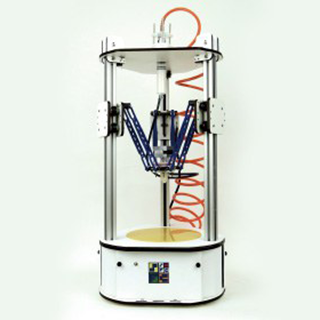
In this new chapter of our series revisiting the most iconic FDM 3D printers, we’re turning the spotlight on a truly distinctive machine, one that stood out in its day not only for its size, but for its strikingly unconventional architecture. Meet the SeeMeCNC Rostock MAX, among the earliest truly workable, community-accessible delta printers, one that opened a new chapter in the world of 3D printing.
Pioneer of delta machines
In 2012, the U.S. company SeeMeCNC launched the Rostock MAX, a refined, more reliable, higher-performance take on the RepRap “Rostock” concept. The goal was clear: put an affordable yet professional-grade delta printer in users’ hands, and it delivered exactly that.
While most home 3D printers of the time followed a classic Cartesian layout (axes moving along X, Y, and Z), the Rostock MAX used a three-tower, triangulation-based delta architecture. The payoff was notably higher speed, smoother curves, and an impressive printable height.
Key technical features
Its motion system relied on hallmark delta kinematics: three tall, vertical towers drove the toolhead via ball-jointed arms. Beyond the visual drama, this enabled very fast, very precise movement.
The early frame was laser-cut wood, an affordable yet sturdy foundation; later revisions introduced steel and aluminum elements for greater durability and accuracy. Build volume was genuinely large: Ø280 mm × 375 mm, perfect for tall, showpiece models.
At its heart was SeeMeCNC’s in-house hotend, compatible with E3D systems, offering flexibility for parts and upgrades. It handled 1.75 mm PLA, ABS, PETG, and lightweight TPU with ease.
On speed, the Rostock MAX impressed out of the box at 100–150 mm/s, and with light tuning it could push beyond 200 mm/s. Early units required manual calibration, a particular challenge with delta machines, but software-assisted routines arrived later to simplify setup.
On the firmware side the Rostock MAX started with Repetier and Marlin, and over time became compatible with Duet3D controllers, keeping the platform both flexible and current.
Why was it a milestone?
The Rostock MAX wasn’t just an interesting alternative, it was the first truly reliable delta printer aimed at real use, not just experimentation. Its towering build height let users produce big, dramatic pieces, cosplay helmets, vases, sculptures, prototypes.
Delta motion is inherently more continuous and often quieter than Cartesian systems, making it ideal for smooth, flowing forms. Setup could be more demanding than average, but the results more than made up for it.
Educational and community role
Schools and universities embraced the Rostock MAX because it was both capable and illustrative. The mesmerizing delta motion made it a great teaching tool in physics, engineering, and computing.
Community support was outstanding: forums, build guides, mods, and firmware updates flourished. SeeMeCNC kept the platform current with MAX v2 and MAX v3, extending its relevance for years.
In summary
The Rostock MAX was a world of its own among 3D printers. Not the easiest choice for beginners, but once dialed in it opened new dimensions of what you could print. Delta systems are still around today, yet few have earned the community respect that SeeMeCNC achieved with this model.
Have you seen or used a delta printer? Is the extra setup worth it for the speed and height you gain?
Tell us in the comments, and stay with us for the next chapter, where another iconic machine takes the stage.