
Knowledge Hub
How to Choose a Material for Extrusion-Based (FDM, FFF) 3D Printing Technology
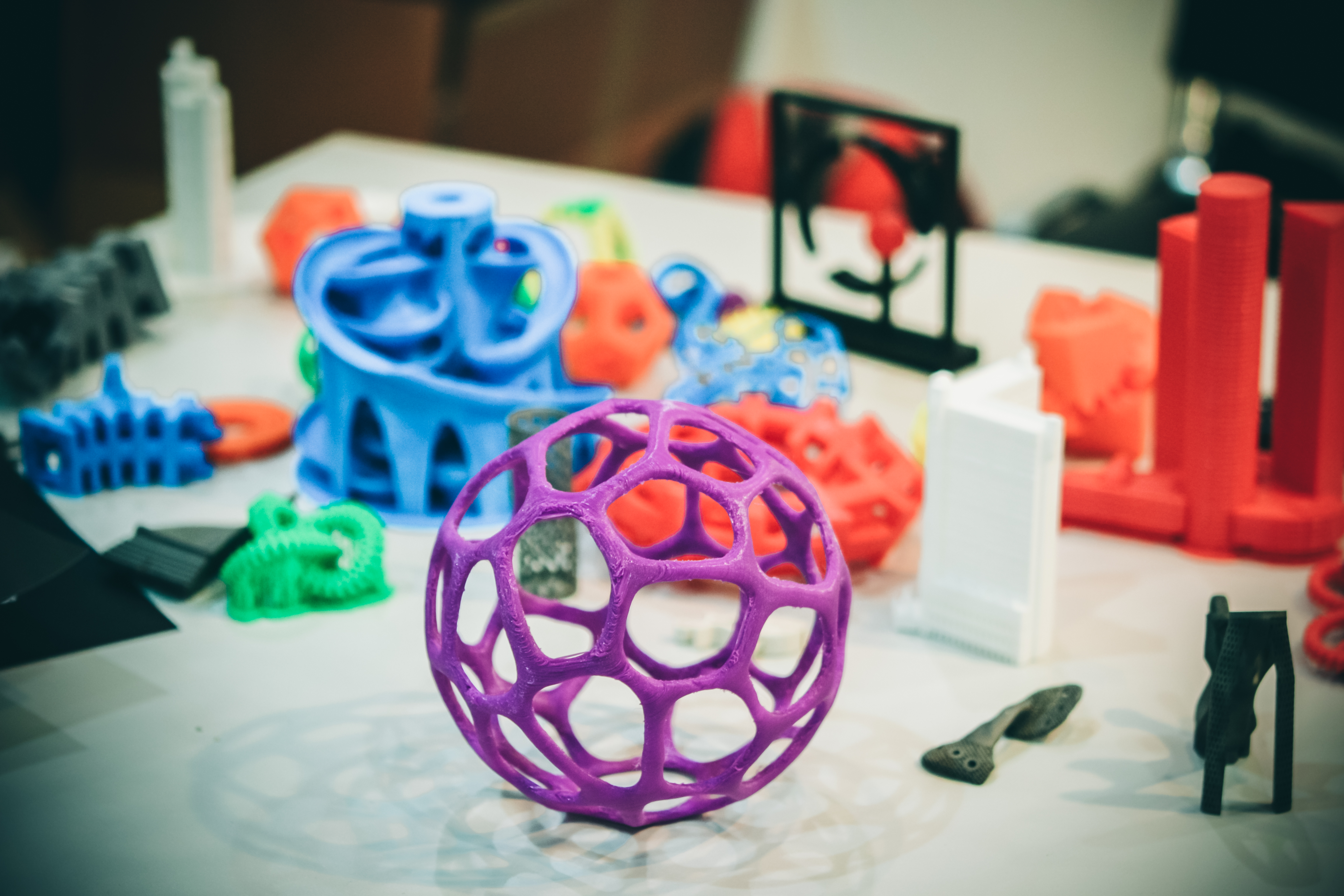
Additive manufacturing (AM technologies), more commonly known as 3D printing, is steadily gaining ground alongside traditional manufacturing methods. However, it is often not easy to decide which material to choose and when. If you too are wondering which material is the right choice for your application, this post is for you.
When it comes to materials that can be processed with MEX technologies (Material Extrusion – FDM, FFF), many people categorize them in different ways. For the sake of clarity, here we present a user-level classification. Based on this, we distinguish three levels:
1. Entry-Level Materials
These are the materials that anyone can print with ease – whether you are just getting started or already an experienced user. They are the most popular materials for machines under $5000, mainly because they don’t require special conditions for printing. Even a simple, open-frame printer can handle them.
The trade-off: their mechanical properties are only moderate to low, and their heat resistance is limited (below ~80 °C), which significantly restricts their fields of application. They are best suited for parts that are not intended for technical purposes, are used mainly in home environments, and are not exposed to significant mechanical or thermal loads, nor to UV radiation.
Typical materials in this category: PLA, PLA+, PVB, PETG.
2. Advanced, Engineering-Grade Materials
Printing with these materials requires more expertise and experience, and in many cases they cannot be processed on the simplest 3D printers. They almost always require a heated bed, and sometimes even a heated chamber for better quality.
The advantage: they allow for parts with stricter design requirements, offering improved resistance to environmental effects (UV, chemicals, etc.), and better mechanical and thermal load capacity compared to entry-level materials. This makes them suitable for functional prototypes and, in some cases, even end-use parts.
Typical materials in this category: ABS, ASA, PC, PC-ABS, TPU, TPE, PP.
3. Industrial, High-Performance Engineering Materials
These represent the current technological peak. They have excellent mechanical and thermal properties, but printing them is highly challenging. They often require nozzle temperatures above 400 °C, enclosed chambers, and in some cases chamber temperatures above 150 °C.
The requirement: to process these materials, specialized (mostly industrial) machines are needed – capable of ensuring process repeatability, meaning that the same quality is consistently achieved under identical printing parameters.
The application: these materials are used mainly in industrial sectors (automotive, aerospace, defense, railway, medical, etc.), where the high investment cost in infrastructure (machines and supporting equipment) can be justified by the need for high performance and quick return on investment.
Typical materials in this category: Polyamides (PA6 and PA12), polyamide composites (PA+carbon fiber, PA+glass fiber), PEEK, PEI/ULTEM.
Key Takeaway
There is no such thing as a single “best” material. Choosing the right one depends on:
- Application requirements (mechanical, thermal, environmental, technological),
- Appearance-related needs (e.g., is post-processing required?),
- Printability with the available equipment,
- and of course, cost considerations.
The selection process is always a compromise-based, iterative approach. Our proven steps are:
- Analyze the thermal, mechanical, environmental, and technological requirements of the part/product.
- Select a suitable candidate material using online databases (e.g., the Simplify3D Materials Guide, or others).
- Perform a printing trial to ensure the material can be processed with the available equipment at the desired quality.
- Print a prototype relevant to the final product and perform validation tests and measurements to confirm the material’s suitability.
- Once the right material is selected, prepare a cost calculation for the final product.
Even after reading this post, if you still feel uncertain – don’t worry. As you’ve seen, material selection is one of the Achilles’ heels of 3D printing. Our expert team is happy to help: get in touch with us, and we’ll guide you in choosing the most suitable material!