
Knowledge Hub
Layer by Layer: The History of Hobby 3D Printing – Part 7
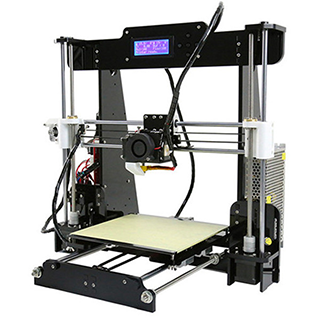
We’re continuing our series revisiting the most influential FDM printers of the past two decades. This time we’re focusing on a machine not known for precision or refined engineering, yet famous for the massive community it built and the countless newcomers it ushered into 3D printing. Meet the Anet A8, the printer you could fear and learn from in equal measure.
The printer you either loved, or grabbed a fire extinguisher for
In 2016, as 3D printing was steadily moving into living rooms, the Chinese manufacturer Anet rolled out an astonishingly cheap yet workable machine: the Anet A8. At around $150, it was irresistible to anyone curious about the tech but unwilling, or unable to drop $500 on a brand-new hobby.
That too-good-to-be-true price came with strings attached. Users often paid the difference in time, effort, and mods, and in some cases with smoke alarms or even fire extinguishers.
Build and mechanical quirks
Core specs: PLA, ABS, PETG (though good results often required heavy modding), 220 × 220 × 240 mm build volume, 40–50 mm/s stock speeds (70+ mm/s with tuning), heated bed (with wiring/solder joints that were frequent failure points), 0.10–0.30 mm layer heights.
The A8’s frame was entirely laser-cut acrylic. Light and inexpensive, yes, but far from rigid. Larger prints were prone to vibration and wobble. Even so, for many beginners it was a low-risk launchpad into 3D printing.
Motion followed the familiar Prusa i3 template: the bed moved on Y, the extruder rode X and Z. Positioning came from threaded rods and GT2 belts, simple, effective, and very “entry-level.” The stock setup used a direct-drive extruder with a 0.4 mm nozzle; the factory hotend wasn’t exactly a reliability icon, so many owners quickly swapped to an E3D-style replacement for steadier, cleaner extrusion.
Electronics were handled by Anet’s v1.0 control board. It did the basics, but it didn’t inspire universal confidence. Over time the community devised a long list of fixes and upgrades to make it safer and more dependable.
Why did it become a cult classic?
The A8 wasn’t revolutionary or innovative. What it did do was opening the door. Its rock-bottom price brought masses into 3D printing. Print quality wasn’t great out of the box, the machine wasn’t particularly safe or sturdy—but it was cheap, and thanks to open designs the community pounced.
The printer became a learning platform as much as a tool: users learned to add external MOSFETs, rewire and re-terminate cables, stiffen the frame with printed braces, improve part cooling, or even drop in an entirely new controller. Modding, maintenance, electronics, firmware, A8 owners got a crash course in all of it.
The infamous safety issues
You can’t tell the A8 story without mentioning fire risk. Weak solder joints, an overtaxed mainboard, and undersized wiring led to overheating, shorts, and yes, documented fires. Hence the community joke: if you buy an A8, buy a smoke detector too.
Even so, many owners didn’t bin the machine, they rescued it, and a movement grew around repair, upgrades, and knowledge-sharing.
Legacy
Technically, the A8 is outdated today. Historically, it’s pivotal. It proved that 3D printing wasn’t just for deep-pocketed tinkerers; it could be for anyone with time, tools, patience (and perhaps a fire extinguisher). In its wake came safer, more refined machines: the Creality Ender line, Anet A8 Plus, BIQU models, and more, each walking the trail the A8 helped blaze.
Did you try an A8 or see one in action?
Share your experiences in the comments, and stick with us for the next chapter as we profile another icon from the early days of hobby 3D printing.